

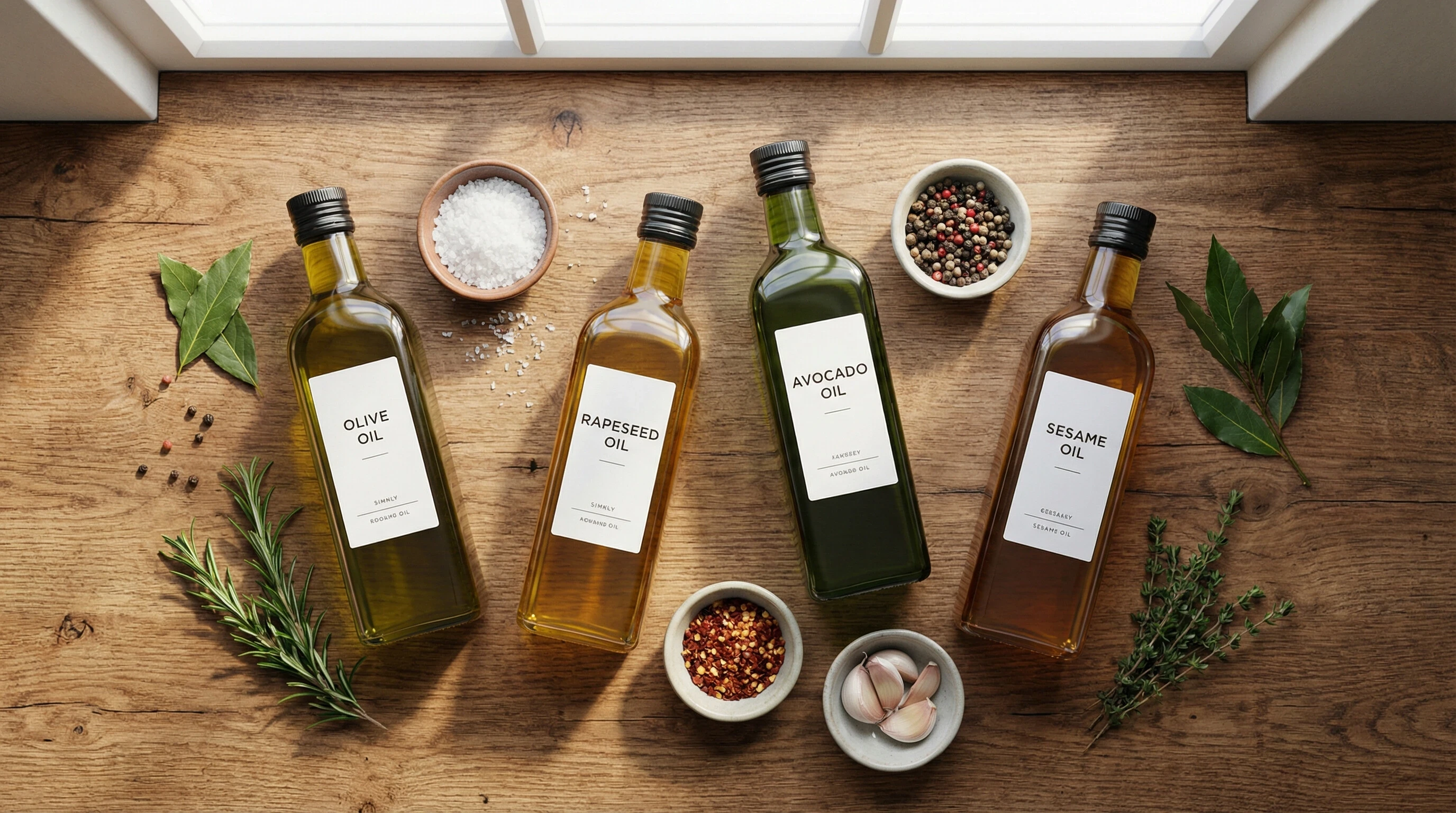
Choosing a healthy cooking oil shouldn’t be complicated, but the supermarket shelves can make it feel that way. With so many options and price differences, it’s hard to know which oils are actually useful for everyday cooking. This guide keeps things simple, explaining the oils you’ll see most often and when each one works best.
What Makes an Oil “Healthy”?
A healthy oil has a good balance of fats, mainly monounsaturated and polyunsaturated. These are found in oils like olive, rapeseed, and avocado. Saturated fats — such as those in coconut oil, butter, and ghee — can still have a place in the kitchen, but they’re best used occasionally rather than as everyday staples.
Smoke point also matters. This is the temperature at which an oil starts to burn and break down. High‑heat cooking needs oils that stay stable; gentle cooking and dressings don’t.
Flavour is the final piece. Some oils bring richness, some stay neutral, and some add a distinctive note. Choosing an oil that suits the dish makes simple food taste better without extra effort.
A Quick Look at Everyday Oils
Olive Oil
- Regular olive oil: Mild flavour, suitable for frying and roasting.
- Extra virgin olive oil: Cold‑pressed, full‑flavoured, rich in antioxidants. Best for low heat cooking, dressings, and finishing dishes.
Rapeseed (Canola) Oil
Neutral taste, high in monounsaturated fats and omega‑3s, and budget‑friendly. Excellent for roasting, baking, and frying.
Avocado Oil
Subtle, buttery flavour with a very high smoke point. Works for both high‑heat cooking and finishing, though it’s usually more expensive.
Sesame Oil
Toasted sesame oil adds a strong, nutty flavour to dressings, stir‑fries, and sauces. Best used at the end of cooking rather than for deep frying.
Coconut Oil
Solid at room temperature with a distinct flavour. High in saturated fat, so best used sparingly and only when its taste suits the dish.
Butter and Ghee
Butter suits baking and gentle sautéing. Ghee has a higher smoke point and a rich, nutty flavour, making it useful for high‑heat cooking and certain traditional dishes.
Choosing Oils by Cooking Method
High Heat (frying, searing, hot roasting)
- Rapeseed oil
- Avocado oil
- Refined olive oil
- Ghee
These stay stable and don’t burn quickly.
Gentle Sautéing
- Extra virgin olive oil
- Butter
Both add flavour and work well at moderate temperatures.
Roasting
- Rapeseed oil
- Avocado oil
- Regular olive oil
Extra virgin olive oil is best added after roasting for flavour.
Dressings and Finishing
- Extra virgin olive oil
- Toasted sesame oil
- Avocado oil
These shine when used raw or added at the end.
How to Choose Good Quality Oils
- Look for cold‑pressed or extra virgin for flavour and minimal processing.
- Choose dark glass bottles or tins to protect the oil from light.
- Fresh oils should smell clean and pleasant, never sharp or stale.
- Ignore “superfood” claims — freshness and balance matter more.
- Supermarket own‑label oils are often excellent value.
Buying smaller bottles helps keep oils fresh and reduces waste.
How to Store Cooking Oils to Prevent Rancidity
- Keep oils in a cool, dark cupboard, away from heat.
- Use within 3–6 months of opening.
- Discard any oil that smells musty, sharp, or “paint‑like”.
- Smaller bottles stay fresher and are easier to finish in time.
A Simple Everyday Line‑Up
A small, reliable selection covers almost every meal:
- Rapeseed oil for frying and roasting
- Extra virgin olive oil for salads and finishing
- Butter or ghee for baking and richer dishes
- Avocado oil for high‑heat cooking or variety
With just a few reliable oils and a sense of when to use them, healthy cooking becomes easier and more enjoyable. You don’t need a shelf full of bottles — just the right ones for the job.